


Welding Fume Extraction System
WELDING FUME EXTRACTION
Source capture is the most effective solution for controlling welding fumes.
International health organizations recognize the importance of preventing health hazards associated with fumes and vapors generated by arc welding and thermal cutting. In many countries, strict regulations and standards regarding personal exposure limits such as OSHA, PEL, or ACGIH TLV are enforced to minimize workers’ exposure to hazardous metal particles that may be present in welding fumes. Ventilation is the primary solution for reducing employee exposure to welding fumes.
Since welding fumes are generated through a thermal process, dust particles remain suspended in the surrounding air. As the fumes cool, the particles settle onto the work area. They accumulate on workstations and may penetrate machinery and electronic equipment, causing damage and creating additional cleaning requirements, which can lead to increased maintenance and overhead costs.
At Safetech, worker health and safety are top priorities because they directly affect process efficiency, productivity, quality, cost, and project completion. Our solutions begin with understanding the process itself, enabling us to fully understand the work and operational requirements of employees. After detailed analysis and consultation, we recommend the best solution to protect workers while maintaining efficiency, productivity, quality, and workplace cleanliness.
Education and training are essential parts of any successful solution. Customers are trained on the solution approach, operation of the fume extraction equipment, system integration into the process, and maintenance procedures.
Whenever possible, source capture has proven to be the most effective and optimal method for collecting and removing welding fumes and similar airborne contaminants. By using this method, the risk of workers or operators being exposed to hazardous fumes is minimized.
With many years of industry experience, we can provide application assessments, solution recommendations and implementation, system design, engineering and installation, product and system support, commissioning, diagnostic and maintenance service programs, assistance in complying with clean air regulations and standards, and energy-saving solutions.
The essential components required to achieve effective source capture include an easily adjustable extraction device with a well-designed hood, sufficient airflow through the extraction system, and an attentive welder who positions the hood properly to draw hazardous fumes away from the breathing zone while preventing the fumes from spreading throughout the work area.
Source Capture Welding Fume Extraction with Extraction Arms
Nederman offers a wide range of extraction arms with various designs. The extraction arms are highly flexible and easy to adjust. They can be connected to both fixed and mobile dust collectors and filtration units.
Welding Fume Extraction Arms
The most effective solution for eliminating and minimizing welding fumes is extraction close to or directly at the source. Extraction arms, sometimes referred to as suction arms, are available in different diameters and lengths. They can typically be positioned 6–15 inches from the welding fume source and usually operate with airflow capacities ranging from 500–1,000 CFM.
Variations in arm design and configuration are intended to suit different applications, including compact workspaces or applications requiring reach distances of 20 feet or more. A wide range of welding fume extraction arms is available with highly flexible and easy-to-adjust designs suitable for many applications. These arms can be connected to both fixed and mobile dust collection and filtration units.
Welding Fume Extraction with On-Gun Extraction and Overhead Hoods
Semi-automatic and robotic welding applications use precision machinery and electronic controls to perform welding and cutting operations that are traditionally carried out by welders. Because mechanical equipment or robotic arms perform the welding process, extraction arms are often difficult to apply due to large work envelopes, complex movements, and dedicated work areas.
Solutions for semi-automatic and automated welding processes include on-gun extraction systems and overhead canopy hoods designed to capture welding fumes effectively.


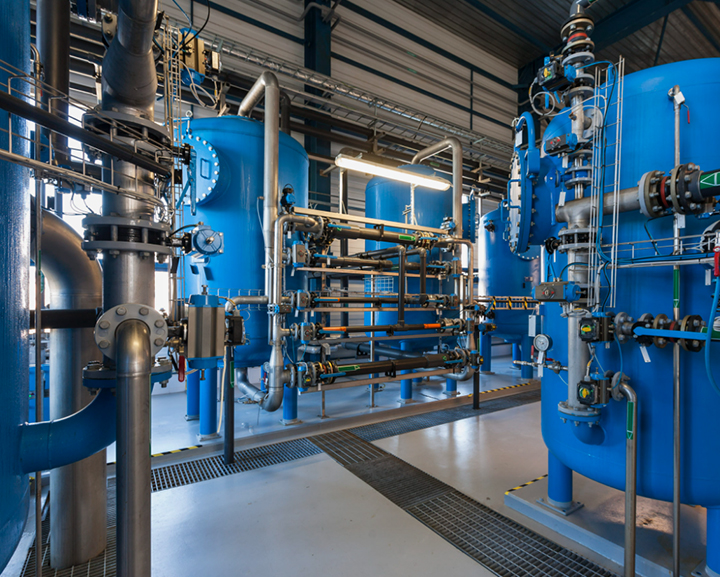
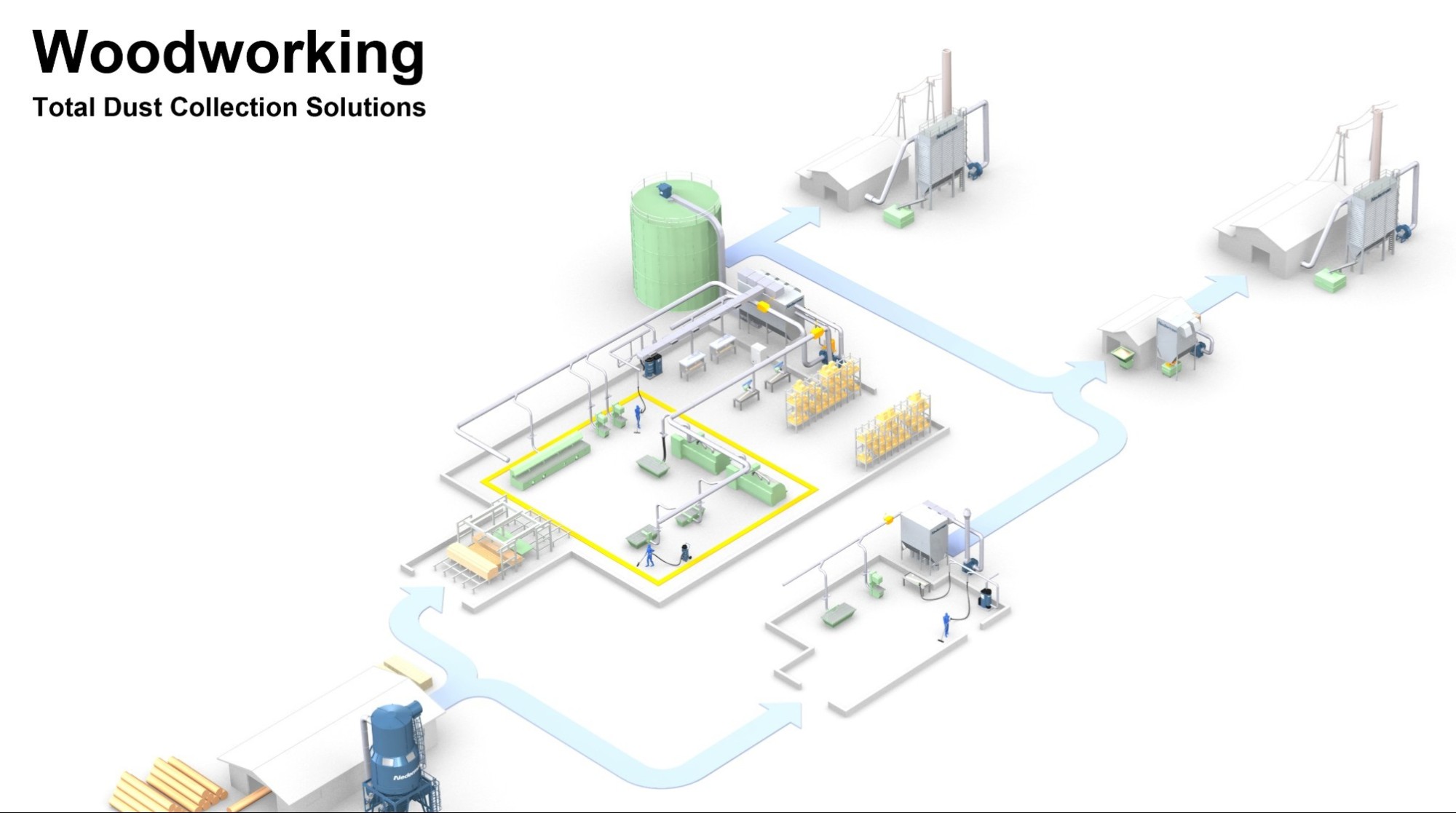
Other Applications
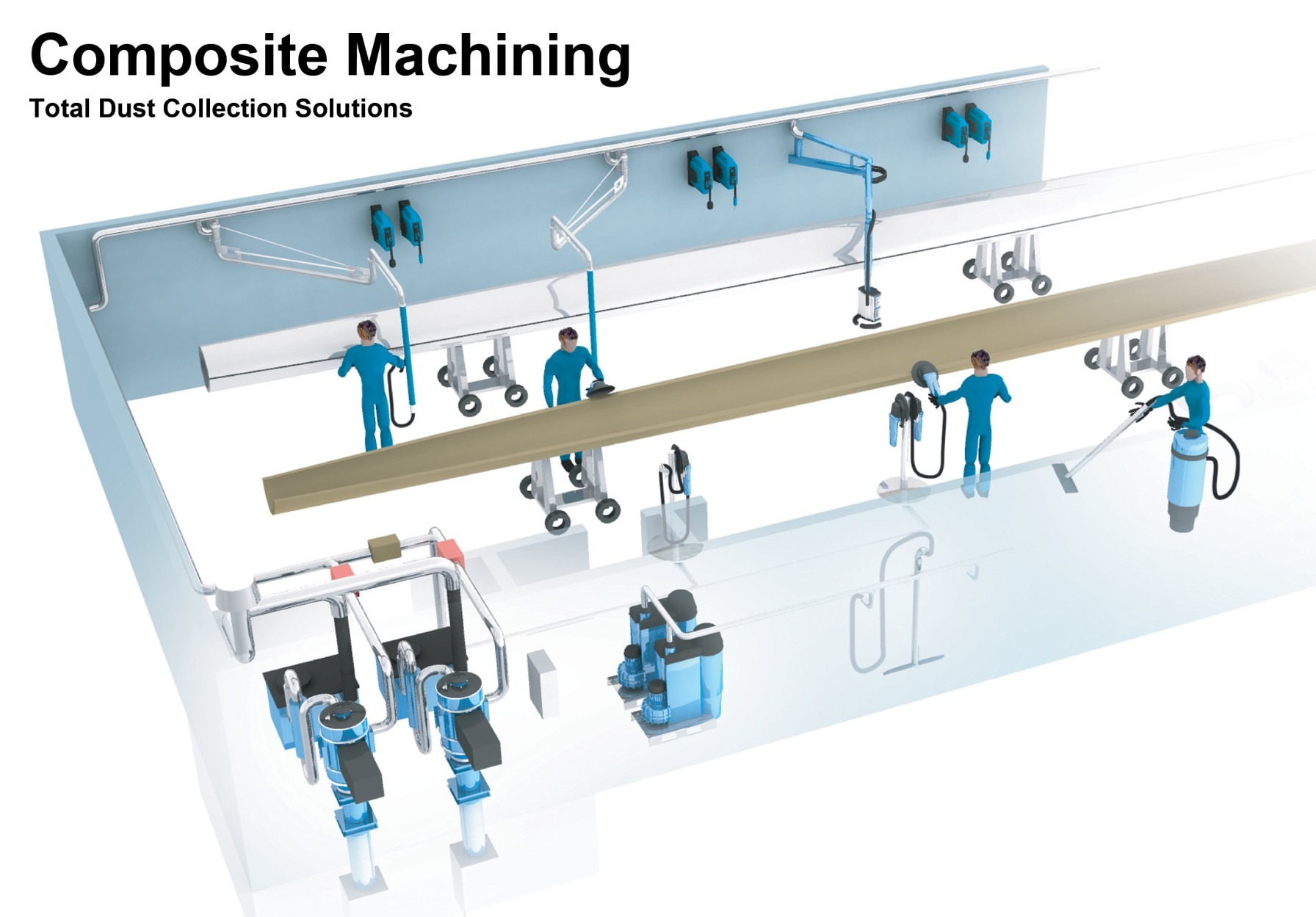
With the increasing use of composite materials such as fiberglass, carbon fiber, and reinforced plastics in industries like aerospace, automotive, and wind energy, these materials offer superior strength and flexibility. However, their machining processes generate hazardous composite dust.

Contact
We have extensive experience with various challenges across different industries, and our experts are highly skilled, helpful, and professional. With us, you can rest assured that we take care of you and your needs. You are always welcome to contact us, whether you have a short question or a more complex and intricate one. A warm welcome to Safetech.
SAFETECH
- 14 Trương Quyền, Phường Võ Thị Sáu, Quận 3, Thành phố Hồ Chí Minh
- 0937 378 515
- info@safetech.com


